
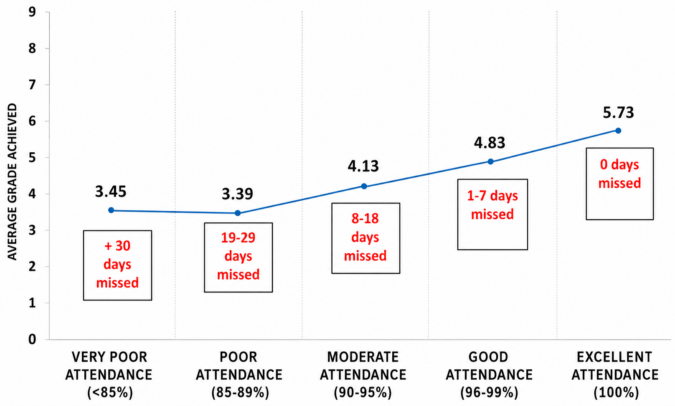
Impact on Achievement:
Regular attendance is not just a legal requirement, but it is vital for students to maximise their learning, and achieve full potential here at Arena Academy. Research shows that students with the best attendance also achieve the best results. Please find below a chart showing the impact that attendance has on outcomes.
The Importance of School Attendance
School attendance is not merely a requirement but a fundamental part of education. It plays an important role as it shapes:
- Relationships and well-being: School provides a vital social environment for children to interact with peers, develop friendships, and learn essential social skills. Consistent attendance ensures children remain connected to their peer group.High levels of school attendance contribute to the overall wellbeing of pupils.
- Teacher Interactions: Regular attendance allows for meaningful teacher-child interactions. Teachers can provide personalised support, address questions, and assess individual progress more effectively when children attend regularly.
- Academic Achievement: Regular attendance directly correlates with academic success. Children who attend school consistently are more likely to keep up with the curriculum, perform better in exams, and improve their life outcomes.
- Building Routine: School attendance establishes a structured routine in children’s lives, teaching them time management and responsibility, which are valuable life skills in their post-16 journey.
National data: link between excellent attendance and obtaining strong grades.
A grade 5 is what the majority colleges/businesses now ask students obtain. Click the below link for a more in-depth review from the Department of Education:
Department of Education Report

Inclusive attendance
Rockwood Academy is proudly partnered with Inclusive Attendance. Our unwavering commitment to attendance centres around child-centric actions, evidence-informed practices, and a shared understanding of everyone’s roles and collective responsibilities to promote exceptional attendance.
Multi-Tiered System of Support
To guarantee a comprehensive approach to attendance, we implement a Multi-Tiered System of Support. A Multi-Tiered System of Support (MTSS) for school attendance involves three tiers of intervention, with roles for teachers, the school, children, parents, and external agencies – including the Local Authority. Data-driven decision-making and training requirements are pivotal to the implementation of the system. The system aligns with the Department for Education’s (DFE) “Working Together to Improve School Attendance” guidelines.
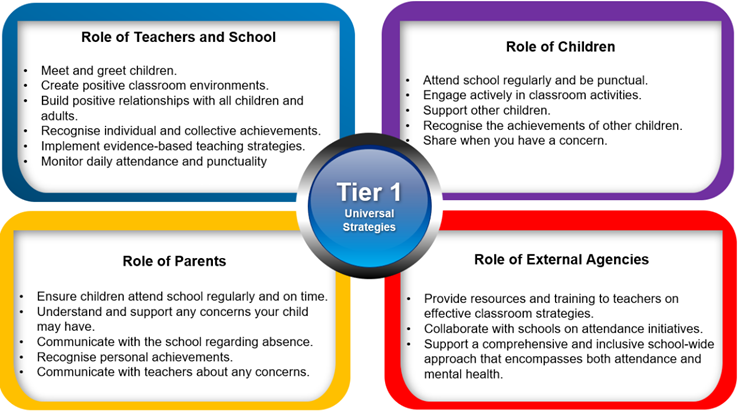
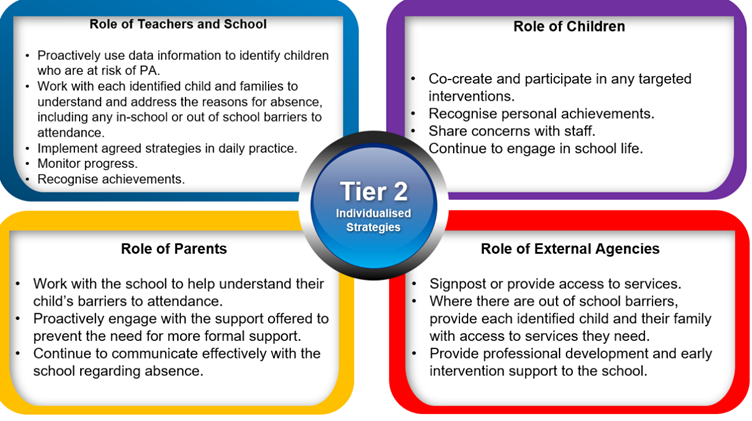
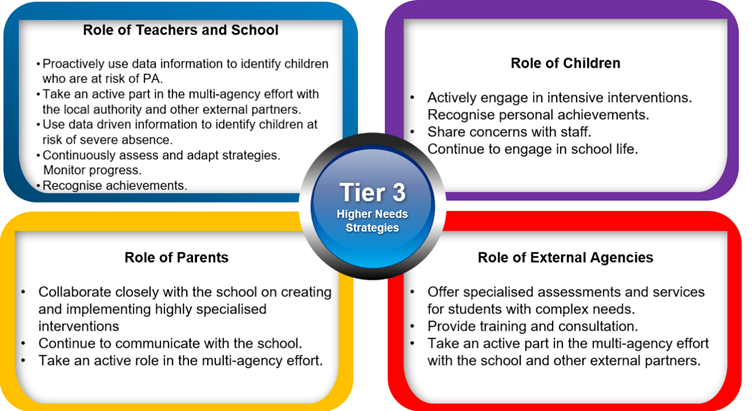
Our attendance philosophy is rooted in a recognition-based approach that recognises both personal and collective achievements. This approach serves to cultivate positive environments, nurture relationships, foster inclusivity, and ultimately cultivate intrinsic motivation among our children, families, and staff.
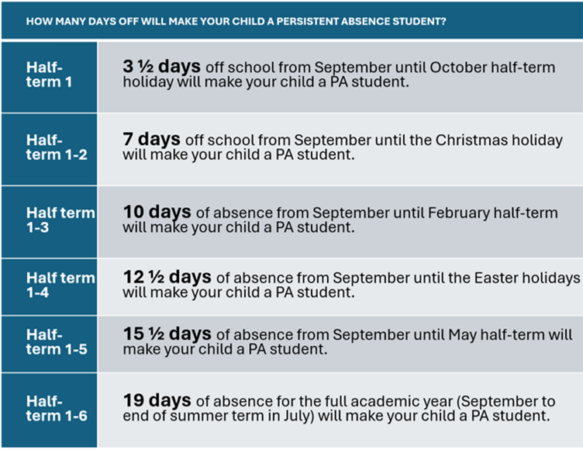
What is a ‘persistently absent’ (PA) student
If your child takes too much time off school the government categorise such students as PA or persistently absent. (19 days off school = persistent absence). When your child becomes PA the fining process can begin which can also lead to prosecution if your child’s attendance does not improve at this point. This table shows how many days missed each half–term will make your child a PA student:
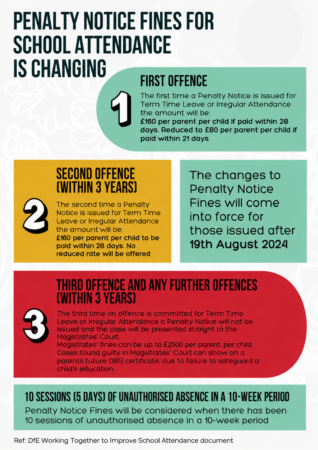
Fining parents for persistent non-attendance
Schools can fine parents for the unauthorised absence of their child from school, where the child is of compulsory school age. Parents or guardians are legally responsible for ensuring their child’s regular school attendance. Failing to do so can lead to legal consequences.
We can help
If you are concerned about your child’s school attendance it is always best to talk to us first.
Useful Resources
Family Hubs
School Attendance, advice for parents
Medical Support from a School nurse
Young Minds – Anger
Young Minds – Self Harm
Young Minds – Mental Health and Illness
Young minds – Eating Problems and Disorders
Young Minds- Depression
Young minds – Problems at School
Young minds – bullying
What we are asking you to do
As a parent or carer, there are important steps that we would ask you to take to support us in this focus on high levels of attendance.
- Ensure your child attends every day, on time, equipped and ready to learn. School starts promptly at 8.40am. Students arriving after 8.40am must sign in late at reception.
- Ensure the school has up to date addresses and telephone numbers. We will contact you if your child is absent and you have not contacted the school. This ensures that any absence is quickly identified.
- If your child is ill, please contact the school on each day of their absence and provide an explanatory note on their return to school.
- If no contact is received regarding the absence, it is recorded as unauthorised. Ultimately the school is responsible for deciding if the absence is acceptable or not. Only genuine absence will be authorised. You will be asked to provide medical evidence if your child has a poor attendance record.
- Please ensure that medical appointments are made outside of school time.
- Avoid trivial absences such as, ‘buying new shoes’. This would not be accepted as a reasonable absence.
- Holidays should not be taken in school time. Any Leave of Absence can only be agreed by the Headteacher and only where there are exceptional circumstances.
- Respond to letters or telephone calls regarding attendance and punctuality.
- Contact your child’s Form Tutor, Year Group Coordinator or Head of Year if you are experiencing difficulty in getting your child into school.